

Interesting Recent News from the Infertility Literature

We in our most recent posting on May 8 noted that medicine in general is complicated. Today’s posting makes the same point for reproductive medicine by offering a potpourri of interesting recent articles from the medical literature. We on purpose also included some clinical papers to balance out some of the hard science in other papers. But in combination, all of today’s discussed papers demonstrate the amazing breadth of reproductive biology and medicine. We are so lucky!
The CHR’s Editorial Staff

Prophylactic Salpingectomy to Prevent Ovarian/Peritoneal Cancer
Now that it is well established that a considerable majority of serous ovarian cancers - once believed to be of ovarian in origin - are really of tubal origin, - the question of whether to perform opportunistic and/or prophylactic bilateral salpingectomies has once again come to the forefront. And an answer to this question is what a huge group of investigators from all over the world recently investigated and in a Research letter reported in JAMA Network Open.1
In this retrospective cohort study from British Columbia, the investigators added up data from preliminary studies, thereby demonstrating added evidence of effectiveness for tubal such removal. Patients who underwent the surgery reduced their risk for mucinous cancers by almost 80%. In a secondary outcome, they also reported significantly fewer high grade serous mucinous malignant tumors.
Clearly a milestone!
And related, - the European Society of Gynaecological Oncology just published a Consensus Statement on the subject, identifying 230 studies on the topic, of which 129 were deemed relevant to consensus statement development. Consensus was achieved on 18 statements, with grades of recommendation ranging from B to D and levels of evidence from II to V.
Opportunistic salpingectomy was found significantly associated with a lower risk of subsequent tubo-ovarian carcinoma, with no adverse short-term impact on ovarian function. The procedure appears safe across surgical approaches, with little additional operative time. Existing evidence does not indicate harm to ovarian function or premature menopause, although long-term evidence is not available.
Salpingectomy is feasible during both gynecological and nongynecological procedures and should be considered in women undergoing gynecological surgery and, where possible, in women undergoing selected nongynecological pelvic or abdominal surgeries.
REFERENCES
Sowamber et al., JAMA Network Open 2026;9(2):e2557267
Piek et al., JAMA 2026;335(10):894-902
Immune Cells That Prepare the Uterus for Pregnancy
We have repeatedly pointed out before in these pages that pregnancy is primarily not – as widely assumed - an endocrine but an immune phenomenon. The reason is simple: Many days before an implanting embryo makes contact with the maternal vascular system and, therefore, receives systematic maternal contributions for its development, the mother must locally develop tolerance to the embryonic fetal semi-allograft [it is a full allograft in cases of gestational carrier or donor oocyte pregnancy].
Now a study by Australian investigators reported that seminal fluid expands the uterine gamma/delta T cell population in early pregnancy in mice.1 CD4+ and CD8+ T cells accumulated in the endometrium after mating. The cells that expanded, however, in abundance accumulated after mating were a distinctive type of T cells called gd T cells, which have characteristics of both innate and adaptive immune cells. These cells also had characteristics of elevated activation and proliferation, suggesting that it is seminal plasma rather than sperm that may be critical for preparing the endometrium for implantation.
The concept that seminal plasma may enhance the chance of implantation in IVF cycles is nothing new.2 In prior human studies, seminal plasma infusions into the uterus usually, however, were done at time of oocyte retrieval. These data may suggest that the endometrium requires more time to achieve the desired effects on endometrium, further suggesting that seminal plasma infusions may have to be performed around ovulation.
If also confirmed in humans, this could be a breakthrough!
REFERENCES
Foyle et al., Mucosal Immunol 2026;19(1):P1650-1665
Crawford et al., Hum Reprod Update 2015;21(2):275-284
Could Human Embryos Achieve Diapause?
Some mammals can interrupt the establishment of pregnancy, - a process called embryonic diapause that is active in hundreds of mammals, from mice to moose. But how they do it has not been discovered. Now a study by the laboratory of Alexander Tarakhovsky, PhD, at Rockefeller University in NYC and collaborators from Harvard and Glaxo SmithKline in a paper in Genes & Development reported that transcriptional depression of negative regulators of MAP kinase supports diapause by maintenance of diapause ES cells in pluripotent state.1
Nutrient deficiency during pregnancy can induce embryonic diapause characterized by systemic changes that minimize reliance on external energy sources while ensuring survival. These changes do not affect the pluripotent state of embryonic stem (ES) cells, allowing normal development once diapause ends. The investigators in this paper identified a transcriptional mechanism that maintained ES cell pluripotency during diapause.
Inhibition of mTOR, which induces a diapause-like state in ES cells, rapidly upregulated genes encoding negative regulators of the MAP kinase (NRMAPK) pathway, a key driver of ES cell differentiation. Elevated NRMAPK expression and associated suppression of MAP kinase activity are also hallmarks of ES cells driven into diapause-like states by long-term inhibition of BET proteins, which regulate differentiation- and growth-promoting gene expression. Suppression of NRMAPK in diapause-like ES cells lead to differentiation and termination of the diapause-like state. Mechanistically, diapause-associated NRMAPK activation involved mTOR or BET inhibition-triggered release of the transcriptional repressor Capicua (CIC) from NRMAPK gene promoters.
This data highlighted a key role for mTOR- and BET-controlled transcriptional regulation of MAP kinase activity via negative regulators in maintaining the pluripotent state of diapause ES cells and potentially other metabolically dormant stem or stem-like cells.
This is, of course, a potentially groundbreaking mouse paper with not only a variety of potential implications for human pregnancy, but also for cancer treatment since cancer stem cells are known to survive in a diapause-like state in tissue. Though more speculative, one other possible application comes to mind, - the years-long survival of primordial follicles in ovaries in resting stage.
A fascinating paper! We had scheduled its senior author for GrandRounds at the CHR on May 5. Unfortunately, he had to cancel and we hope to reschedule after the summer break.
REFERENCE
Zhang et al., Genes & Development 2026;40:319-327
Improving the Functional Ovarian Reserve (FOR) Even in POI Patients
Japanese investigators just demonstrated in an article in PNAS that in addition to hormones, mechanical stress plays a role in in maintaining the balance between dormancy and activation of these follicles.1 External pressure on oocytes directly leads to nuclear import of the transcription factor FOXO3, which induces changes downstream in signaling that suppress follicle activation and growth.
And in a Research Article in Science Summary, Lin et al reported that finerenone (Kerendia®, Bayer) – by the FDA categorized as alone in its drug class as a nonsteroidal MRA that selectively a potently blocks MR (mineralocorticoid receptor for aldosterone) overactivation (see figure below) and is considered an antifibrotic drug. The investigators systematically screened 1,297 compounds from an FDA-approved drug library before identifying finerenone.
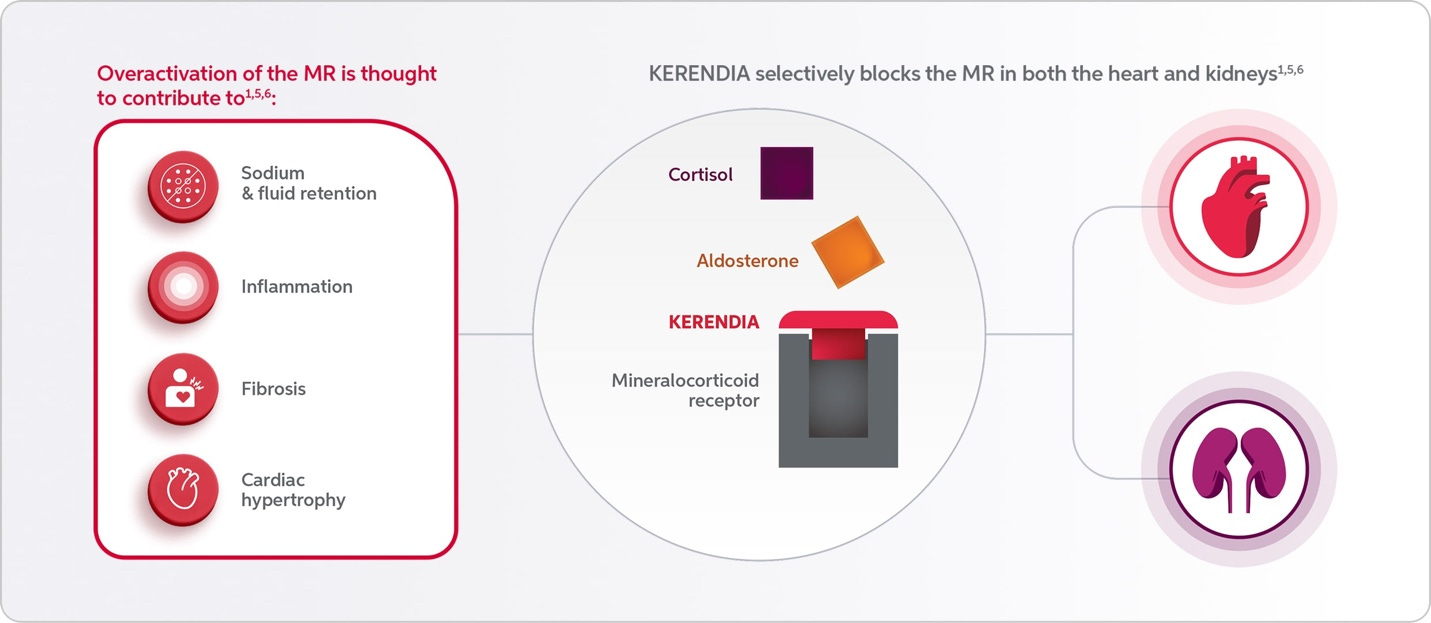
After initially demonstrating that the drug promoted follicular development in mice with no adverse effects on oocyte quality, early embryo development or offspring health, they now demonstrated that clinical administration of 20mg twice weekly promoted the development of follicles in patients with primary ovarian insufficiency (POI) under age 40, yielding mature eggs and viable embryos.
They were also able to demonstrate that the drug reduced collagen depositions (i.e., fibrosis) within aged ovaries, thereby reducing stromal fibrosis-mediated restriction of follicular development and producing a more permissive microenvironment for follicle activation and growth.
The investigators in addition identified other oral FDA-approved antifibrotic drugs, including nintedanib (Ofev® and Vegatev®), - an oral tyrosine kinase inhibitor slowing idiopathic pulmonary fibrosis and systemic sclerosis-associated lung disease by blocking growth factor receptors), ruxolitinib (Jakafy®, - a Janus kinase – JAK – inhibitor used to treat myelofibrosis, polycythemia, and graft vs, host disease -GVHD) and others also effective in inducing follicle growth. Finerenone appears, however, so-far to have the least side effects.
The authors from these studies concluded that anti-fibrotic drugs could be in general repurposed to treat POI.
This remarkable article was followed by a Perspective article by two Miami-based scientists, in which they extensively reviewed the literature in support of the hypothesis that ovarian fibrosis inhibits follicle development and that, therefore, anti-fibrotic drugs can, indeed, be expected to help.3
Here is a little more detail: It is well established that even women in full menopause still have follicles in their ovaries. So how come they no longer respond to stimulation? Research in 2024 and 2025 demonstrated that increasing inflammation (every ovulation is basically an inflammatory event) and collagen deposition (due to the following fibrosis), render the ovary stiffer, which, in turn, increases intraovarian pressure, which leads to poor follicle response to gonadotropins. This increasingly fibrotic and stiff microenvironment then prevents follicles from expanding and from responding properly to stimulation. The results are anovulation and infertility (see figure below).
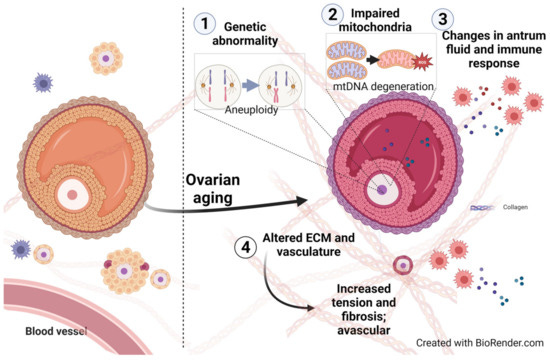
Under normal healing conditions in response to injury, tissue remodels with tissue regeneration without permanent damage. Cyclic changes in the production and degradation of extracellular matrix (ECM) are part of normal cyclic process of ovarian follicle development. As the ovary ages, the accumulation of ECM may prevent the usual enzymatic cleavages of the ECM necessary for normal tissue remodeling, which scars the tissues, leading to the loss of normal ovarian functions. As tissue fibrosis is frequently accompanied by innate and adaptive inflammatory processes, increased fibrosis in the ovarian stroma can then disrupt normal folliculogenesis in patients and do so earlier than normal in patients with POA or POI. In addition, there is evidence that age-related changes in the ovarian microenvironment may damage the proper primordial follicle assembly with stem cells, and the loss of primordial follicles may itself accelerate the aging process.
According to the already above referenced review article,4 approximately 60% of women with low ovarian reserve – whether due to physiologic or premature ovarian aging - have undetectable basal stromal blood flow in at least one ovary, while only 6% of women with good ovarian reserve have undetectable flow in at least one ovary, suggesting that alterations in the ovarian stromal vasculature may be associated with the pathophysiology of ovarian aging. This assumption was several years ago indeed confirmed by the CHR’s Visiting Senior Scientist, Pasquale Patrizio, MD, - when he still was at Yale University (he is now at much warmer Miller School of Medicine of Miami University).5 Normal aging in association with ovarian tissue fibrosis was also in parallel demonstrated to be associated with blood vessel damage.
In summary, a more comprehensive picture of ovarian aging is becoming apparent, which suggests that therapeutic intervention geared at mechanical processes caused by fibrosis during ovarian aging may be clinically successful in treating “older” ovaries. The CHR is getting ready to initiate a finerenone (Kerendia®, Byer) trial, but that will still take a few months to get started because it – first - will have to be taken through an IRB approval process.
REFERENCES
Nagamatsu et al., Proc Natl Acad Sci 2026;123(3):e2526249123
Lin Z. Science 2026;391.eadz4075. DOI: 1.1126/science.adz4075
Duncan FE, Babayev E. Science. 2026;391(6785):552-553
Molinari et al., Mol Hum reprod 2016;22(8):866-876
Chang CL. Int J Molec Sci 2023;24(19): 1475
A New, Very Promising Primate Monkey Embryo Model
The number of published stem-cell-based embryo models is by now so big that it is almost impossible to follow them all. Chinese investigators, however, now published in Nature a stem-cell-based monkey embryo model that self-organizes into a comprehensive body plan and, therefore, could lead the way to more sophisticated models of early human development.1 In a Commentary to this paper in the same journal, two scientists from Washington University School of Medicine in St. Louis, therefore, described this paper as a “leap forward” that should allow the development of similar human models.2
They note that the ultimate test of any model would, of course, be human implantation, - a procedure that is ethically and rightly still unthinkable. A monkey model, however, could allow this and – once there is enough monkey data available to strongly suggest safety, - who knows?
REFERENCES
Li et al., Nature 2025;649(8095):161-172
Kong X, Theunissen TW. Nature 2026;649:34-35
Is Autism Not Really a Male-dominated Disorder?
A recent paper in the BMJ involving 2,756,779 liveborn children in the Swedish medical birth registry produced quite surprising results by demonstrating that the male to female ratio of autism decreased over time and with increasing age at diagnosis.1 They concluded that the ratio, therefore, may be substantially lower than believed so-far and, indeed, may (at least in Sweden) be very similar between the sexes. The reason is that women are diagnosed later than males. Why that would be, is still undetermined. The paper also does not inform of differences in severity of the condition. We for the time, therefore, reserve judgment on this issue!
REFERENCE
Fyfe et al. BMJ 2026;392:e084164