Pregnancy and Obstetrical Practice News: Hyperemesis Gravidarum, Preeclampsia, and More
Today’s posting covers recent news about topics related to pregnancy and obstetrical practice. One update focuses on Hyperemesis Gravidarum, and the ongoing questions about whether this severe form of nausea and vomiting during pregnancy can negatively affect pregnancy outcomes. On a happier note, there are also some promising updates on the treatment of anhydramnios due to fetal kidney failure. In addition, we now know more about the effects of a second pregnancy on a woman’s brain. We hope you’ll find this wide variety of news items as interesting as we do. As always, we are welcoming comments from our readers.
The CHR’s Editorial Staff

Does Hyperemesis Gravidarum Adversely Affect Pregnancy Outcomes?
Hyperemesis Gravidarum (HG) is a serious form of nausea and vomiting during pregnancy that goes beyond just typical “morning sickness.” It affects between 1-3% of all pregnancies and is the leading cause of hospitalization during early pregnancy. What causes HG is basically unknown. A hypothesis suggests that maternal undernutrition (whatever that means) leads to abnormal placental development and function, thereby increasing adverse pregnancy outcomes. Interestingly, “morning sickness” is in contrast generally viewed as a reassuring sign in early pregnancy and often viewed as confirmation of an appropriate maternal immune response toward the fetus.
Whether HG adversely affects pregnancy outcomes is basically still unknown. Investigators from Stanford University now evaluated a possible association between HG and adverse pregnancy outcomes in a data set of 2.5 million singleton live births in California between 2007 and 2011 and found that – after adjustments for confounders – HG was associated with higher risk for preeclampsia, gestational hypertension, preterm birth, small for gestational age (SGA) births, placental abruption, and anemia. Risks in most instances were higher if a first hospitalization already occurred in the second trimester of pregnancy.
We actually like this study for what the authors did not address, - namely the fact that all adverse pregnancy outcomes discovered to be associated with HG are basically likely evidence for early termination of immunological tolerance by the maternal immune system (prematurity, preeclampsia, SGA, etc.) also seen with practically all autoimmune diseases in pregnancy or are the secondary consequences of those conditions (i.e., placental abruption in hypertensive diseases, for example).
If one were to assume that this, indeed, does represent the correct interpretation of these rather unique study’s results, then the silly nutrition hypothesis can really be finally buried (maybe except for extreme eating disorders), and research should switch to trying to figure out what happens so differently to the mother’s immune system when she experiences no “morning sickness,” has “morning sickness” in early pregnancy, or experiences HG.
REFERENCE
Gardner RM, et al., Am J Epidem 2026; kwag134. https://doi.org/10.1093/aje/kwag134
How Good is Low-Dose Aspirin in Preventing Preeclampsia?
The answer is “very good,” based on an abstract presented at the annual conference of the Society for Maternal-Fetal Medicine 2026 in February in Las Vegas, NV.1 The study, involving over 18,000 pregnant women who received 162 mg of aspirin (i.e., double the standard “baby-aspirin” dosage of 81mg/day) demonstrated a 29% reduction in severe preeclampsia. The benefit was observed in patients with as well as without a history of chronic hypertension, and the study observed no increase in hemorrhagic complications in pregnancy.
Clearly a wonder drug!
REFERENCE
Duryea et al., Society for Maternal-Fetal Medicine 2026; February 8-13, Las Vegas, NV; Abstract LBA02
Promising News Regarding the Treatment of Anhydramnios Due to Fetal Kidney Failure
Lethal pulmonary hypoplasia (PH) is the usual consequence of anhydramnios due to fetal kidney failure. Now, investigators from a consortium of U.S. academic institutions investigated whether serial amnioinfusions instituted before 26 weeks of gestation may prevent occurrence of PH and demonstrated in a nonrandomized clinical trial thatneonatal survival to 14 days or longer with dialysis access was achieved for 19 of 29 live-born neonates (65.5%) with fetal kidney failure not due to bilateral renal agenesis.1 Longer-term infant survival was lower, with 48% surviving to hospital discharge. The treatment was not associated with significant maternal complications.
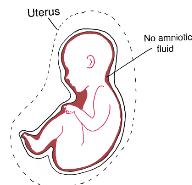
Serial amnioinfusions, thus, to a degree, mitigated lethal pulmonary hypoplasia in neonates with anhydramnios due to fetal kidney failure. Independent of early lung function, significant neonatal morbidity and mortality, however, persisted. Interestingly, Factors associated with survival were consistent with the Renal Anhydramnios Fetal Therapy trial’s2 bilateral renal agenesis cohort (this is a multicenter, prospective clinical study evaluating the use of serial in-utero amnioinfusions for fetuses with Early Pregnancy Renal Anhydramnios), suggesting common mechanistic pathways for mitigating pulmonary hypoplasia.
REFERENCES
Miller et al., JAMA Online ahead of print. July 1, 2026.
NIH, RAFT. https://raft-trial.org/
Effects of a Second Pregnancy on a Woman’s Brain Structure and Function
The same group of Dutch investigators that previously demonstrated that a first pregnancy changes women’s brain structure and resting-state brain activity (which we at the time commented on)1 now reported how a woman’s brain is transformed when she undergoes another pregnancy in a prospective pre-conception cohort study involving 110 women, including women who became pregnant with their second (PRG2) or first child (PRG1) and compared them to nulliparous women.2
Multimodal MRI data demonstrated differential changes between PRG2 and PRG1 in grey matter volume, white matter tracts, and functional neural network organization, - though similar, were less pronounced in PRG2 in regard to structural and functional changes in default mode and frontoparietal network. These observations suggest a primary adaptation of these networks in first-time mothers, - further fine-tuned across a second pregnancy.
Stronger alterations were found in PRG2 in the dorsal attention and somatomotor network, including the corticospinal tract, pointing to an enhanced plasticity within these externally-oriented networks.
Combining all data, the authors concluded that neurostructural changes in both groups related to mother-infant attachment and peripartum depression. A second pregnancy, however, still uniquely changes a woman’s brain, entailing both convergent and distinct neural transformations.
REFERENCES
Hoekzema et al., Nat Commun 2022;6931
Straathof et al., Nat Commun 2026;17:1495
In New York City this September 9th? Come celebrate the Center for Human Reproduction’s 25th Anniversary Gala at the iconic venue Guastavino’s! Reserve your seat here.