

Red-Light Therapy and Fertility: Hope, Hype, and What Actually Is Known
Today’s posting addresses the rising popularity of red-light therapy as a recent new “add-on” to in vitro fertilization (IVF). This treatment is increasingly advertised both inside and outside of fertility clinics, and on paper, the hypothesis of red-light therapy offering benefits for male and female infertility sounds both appealing and scientifically plausible. But does the treatment have true evidence for its success? Here, David H. Barad, MD, the Associate Medical Director at the Center for Human Reproduction (CHR), offers some important insights on this topic and what patients should know if they choose to try this “add-on.”
The CHR’s Editorial Staff

Red-Light Therapy and Fertility: Hope, Hype, and What Actually Is Known
By David H. Barad, MD, who at the CHR is Associate Medical Director, Head of Clinical Assisted Reproduction, and Senior Physician Scientist as well as Associate Editor for Statistics and Truth at CHR’s publications, including the CHRVOICE and The Reproductive Times.
In the digital age, patients trying to build families are surrounded by readily available but often unfiltered information—information that can raise hope, - but may also lead them toward interventions of uncertain value. In recent months, several CHR patients have told me that they have either already started or are considering red-light therapy.
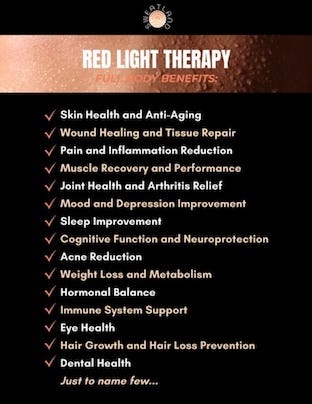
It is easy to understand the appeal of red-light therapy. After all, it is widely advertised as healing almost everything (see figure below), sounds like a gentle treatment, noninvasive, “natural,” and scientifically plausible.
Red-light therapy is now being promoted in some fertility clinics, by providers of acupuncture and wellness treatments, and even in spas and cosmetic studios as a way to improve fertility. Claims include benefits for both female and male infertility, improvement in PCOS—now increasingly referred to as PMOS, or polyendocrine metabolic ovarian syndrome—better egg quality, improved ovarian reserve, enhanced embryo implantation, higher IVF success rates, and even reduced miscarriage risk.
The idea has also reached academic IVF laboratories. Investigators at Columbia University Irving Medical Center here in New York have publicly announced that they are studying near-infrared light exposure for early embryos, based on the hope that brief exposure to red or near-infrared light might improve embryo development and, ultimately, IVF outcomes. To date, however, I am not aware that results from this work have been reported in the peer-reviewed medical literature.
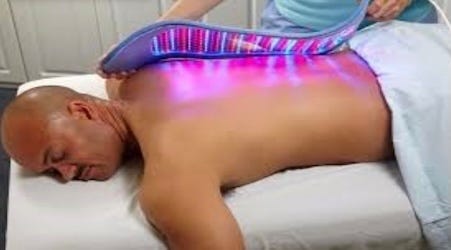
And red-light therapy is not only advertised for female infertility. Males allegedly also can improve their contribution (see below).
But as with many so-called “add-ons” to standard fertility treatments, biological plausibility is not the same as clinical proof.
Because I was not familiar with red-light therapy as a fertility treatment, I was naturally skeptical regarding the claim that simply exposing the body to red light could meaningfully affect ovarian function, endometrial growth and receptivity, or fertility outcomes. To better understand what my patients might be investing their time, money, and hope in, I therefore decided to look more closely into the published literature to understand better the basis for these claims.
Red-light therapy is also called photobiomodulation, or low-level laser/light therapy. It uses red or near-infrared light, usually in the 600–1000 nm range, with the goal of influencing cellular metabolism. In other areas of medicine, photobiomodulation has been studied for pain, inflammation, wound healing, skin changes, and hair growth. Some devices have FDA clearance for selected non-fertility-related uses, but this should not be confused with evidence that red-light therapy improves ovarian reserve or IVF live birth rates. FDA clearance for a device generally relates to safety and a specific intended use; it does not mean the device has been proven to improve fertility.
The proposed fertility mechanism is biologically interesting. Red and near-infrared light may be absorbed by mitochondrial enzymes, especially cytochrome Coxidase, potentially increasing electron transport, mitochondrial membrane potential, and ATP production. Downstream effects may include changes in nitric oxide signaling, oxidative stress pathways, calcium signaling, inflammation, apoptosis, and local blood flow. Since oocytes and early embryos are highly dependent on mitochondrial function, it is understandable that investigators would ask whether carefully delivered light could improve reproductive function.
The important question, however, is not whether the idea is plausible. The question is whether it improves patient-centered fertility outcomes.
Most of the evidence supporting red-light therapy for ovarian function remains preclinical. In animal studies, low-level laser therapy has been reported to affect follicular dynamics, increase some growing follicle populations, reduce apoptosis, and improve markers such as AMH-positive follicles (Oubiña, Pascuali et al. 2019). Some studies in chemotherapy-induced ovarian injury models suggest a possible protective effect (Oubiña, Pascuali et al. 2021). In PCOS-like animal models, photobiomodulation has also been reported to alter follicle number, corpus luteum number, cyst formation, and reproductive hormones (Alves, Bonfá et al. 2019).
An important limitation, however, is that in many of these animal experiments, the ovary was surgically exteriorized and directly exposed to the light source—a very different situation from noninvasive treatment in human patients applied through the skin.
These findings are interesting, but they do not show that red-light therapy regenerates human ovaries. One key point is often lost in typical marketing lingo: Improving the activity or survival of growing follicles is not the same as restoring the resting primordial follicle pool. In at least one animal study, the primordial follicle pool, which represents the fundamental functional ovarian reserve, was not increased. In plain English, - red light did not create new eggs (Oubiña, Pascuali et al. 2019).
Human data are, moreover, far more limited. A small prospective case series reported improved fertility outcomes, including live births, in three women with unexplained age-related infertility after multiwavelength red and near-infrared photobiomodulation (Phypers, Berisha-Muharremi et al. 2024). But a case series of three patients cannot establish efficacy. It cannot separate treatment effect from chance, patient selection, concurrent treatment, or the natural variability we often see in fertility care.
There exist also early laboratory studies suggesting that photobiomodulation may improve mitochondrial activity and maturation of immature human oocytes in vitro. That is scientifically intriguing, but it is not the same as showing that shining light externally on the pelvis improves ovarian reserve, embryo competence, euploidy, pregnancy, or live birth.
Cost is another practical issue. General red-light therapy sessions in wellness settings commonly range from about $25 to $200 per session, depending on whether the treatment is handheld, panel-based, or full-body. Fertility-oriented laser or laser-acupuncture treatments around embryo transfer may cost roughly $200 to $350, and repeated protocols can easily add several hundred to more than a thousand dollars to IVF cycle costs. At-home devices may cost $100 to $1,000 or even more. All of these costs are typically not under insurance coverage and, therefore, out of pocket.
This does not mean red-light therapy is necessarily harmful. When properly used, it appears relatively low risk, though patients should avoid overheating, use eye protection, and be cautious with photosensitizing medications or skin conditions. The larger concern is not physical harm; it is misplaced confidence, the delaying of effective treatments, and - of course - additional expense.
At the CHR, we have long emphasized the distinction between ovarian reserve markers and meaningful reproductive outcomes. AMH, antral follicle count, follicle growth, and even oocyte numbers are useful intermediate measures. But patients ultimately care about embryo competence, pregnancy, miscarriage risk, live birth, time, cost, and emotional burden. A therapy that modestly changes a surrogate marker is not necessarily a therapy that helps patients have babies.
The current bottom line therefore is caution: red-light therapy for ovarian reserve should be considered investigational. The biology is plausible, and the early laboratory and animal data are interesting, - but robust human clinical evidence is lacking. We do not yet have any adequately powered randomized trials showing that red-light therapy improves ovarian reserve, egg quality, cumulative IVF success, or live birth rates.
For patients who wish to try red-light therapy as a relaxation or wellness intervention, and for whom the cost is modest and does not come at the expense of better-established treatments, doing so may be reasonable. The important caveat is that it should not delay proven treatments or replace individualized fertility care.
At the same time, red-light therapy should not be marketed—either inside or outside fertility clinics—as “ovarian rejuvenation.” Patients should be cautious about claims that it can reverse ovarian aging, restore ovarian reserve, or replenish their egg supply.
IVF already suffers from an overabundance of “add-ons” that have failed to demonstrate meaningful clinical benefit; some have even been shown to reduce pregnancy and live-birth chances. Yet these add-ons have contributed, since roughly 2010, to a substantial increase in the average cost of an IVF cycle. Patients do not need more expensive promises unsupported by evidence.
In fertility medicine, hope is essential. But hope serves patients best when it is paired with honesty. Red-light therapy may one day find a defined role in reproductive medicine, perhaps in carefully controlled laboratory applications or in specific patient groups. For now, however, it remains a promising hypothesis—not an established fertility treatment.
REFERENCES – in alphabetic order by author:
Alves, E. D., A. L. O. Bonfá, G. R. Pigatto, J. A. Anselmo-Franci, J. A. Achcar, N. A. Parizotto and L. H. Montrezor (2019). “Photobiomodulation can improve ovarian activity in polycystic ovary syndrome-induced rats.” J Photochem Photobiol B 194: 6–13.
Phypers, R., V. Berisha-Muharremi and R. Hanna (2024). “The Efficacy of Multiwavelength Red and Near-Infrared Transdermal Photobiomodulation Light Therapy in Enhancing Female Fertility Outcomes and Improving Reproductive Health: A Prospective Case Series with 9-Month Follow-Up.” J Clin Med 13(23).
Oubiña, G., N. Pascuali, L. Scotti, S. Bianchi, M. May, J. E. Martínez, C. Marchese Ragona, J. Higuera, D. Abramovich and F. Parborell (2021). “Local application of low level laser therapy in mice ameliorates ovarian damage induced by cyclophosphamide.” Mol Cell Endocrinol 531: 111318.
Oubiña, G., N. Pascuali, L. Scotti, M. Di Pietro, F. A. La Spina, M. G. Buffone, J. Higuera, D. Abramovich and F. Parborell (2019). “Low level laser therapy (LLLT) modulates ovarian function in mature female mice.” ProgBiophys Mol Biol 145: 10–18.