

The Business of Medicine
Medicine is a business and it, indeed, is a business at many different levels and in many varying corners of society, - after COVID by 2024 representing 18% of U.S. GDP which by 2025 is estimated – though not yet formally announced – to have decline to somewhere between 16.4% and 17%. But even these latter numbers are unmatched by other developed western countries which operate their health care systems in a range of 9% to 12%.
Though we, of course, do not want a health care system like in - for example - Canada with its unbelievable difficulties in even getting just simple testing done (the CHR’s Canadian patients often cross the border, - just for blood draws), it is undeniable that U.S. health care has become too expensive.
That our today’s posting therefore addresses issues within the business of medicine should not surprise. And even though many principle problems, of course, apply to all of medicine, small specialty areas like infertility will, of course – as here presented today, have at time their own peculiarities,
As always, - let us know what you think!
The CHR’s Editorial Staff

Even the Endowments of the Ivy League Are Staying Away from Investing in Private Capital
Yes, - investment money is not available as easily as it used to be: Even Ivy League universities, which in recent years heavily invested especially in Private Equity (PE), are holding back, as a recent Wall Street Journal article pointed out.1 As the article noted, PE in past years considered the endowments of major universities among its largest and most loyal clients. But with returns struggling to even match broader stock-market benchmarks, - those days are over.
As the article noted, Princeton University lowered its expectations regarding its endowment’s returns, Yale trimmed its portfolio, and Harvard announced cashing out of some private-market investments. More to come here on this subject in the near future!
REFERENCE
Gillers H. The Wall Street Journal, February 15, 2026. https://www.wsj.com/finance/investing/the-ivies-are-having-second-thoughts-about-investing-in-private-equity-de04e52a
Direct to Consumers Drug Advertisements Once Again Under Discussion
The New York Times recently addressed in an article by Paula Span direct to consumer marketing of medications, - a debate dating back to 1997, when the FDA loosened restrictions and allowed advertisements of prescription drugs. As the article noted, research demonstrated that these ads influence prescription rates and – except for New Zealand and the U.S, - no other country allows such advertisements (and in the U.S., the AMA has been strongly opposing this kind of prescription drug advertisement).
One expert is quoted in the article as noting that, “often really good drugs sell themselves.” Drugs without added therapeutic values are then the ones that require “to be pushed” and these are the medication we then see on TV.
And in this rare instance, we, indeed, do agree with the AMA because we do not understand how such advertisement can benefit anybody. Starting with the consumer, what does she/he have there to gain? If the patient has to tell the doctor which medication to prescribe, the only thing we can recommend to the patient is to choose another physician! And to the physicians who need to be told by their patients what to prescribe, - maybe it’s time for retirement, - or at least some serious CME.
And then there is also the issue with food supplements!
They by now may very well represent a majority of all adds on television (it’s at least close!) claiming all kinds of “miraculous” benefits. This industry also needs a serious review sale of food-supplements, indeed, also should undergo review Dietary supplements now represent a $65-70 plus billion (yes, billions!) and by 2030 is expected to exceed $130 billion. And if you define the field even broader by, for example adding sports nutrition and functional products, the market size in 2025 already represented approximately $113.6 billion.
Watching the daily onslaught of advertisements on television, the hubris in this marketplace, indeed, appears even more out of control than on the pharma side and, of course, is mostly not under the control of prescribing physicians.
REFERENCE
Span P. The New York Times. February 17, 2026,. pD3
The Disappointment with Highly Touted Blood-screening Tests for Multiple Cancers – just another example for the predatory behavior of the genetic testing industry
Especially over the last year, the medical literature reported on several proposed blood tests for early cancer detection claiming to be able to detect individual cancers or even a whole bunch of them together before cancers produce symptoms or other tests can reveal them. Early detection in almost all cancers, of course, promises better cure rates and expectations for these tests, therefore, have been very high.
The New York Times and other news outfits between, however, earlier this year suddenly reported that claimed outcome benefits turned out not to be what had been represented. And if this makes you think of other widely touted tests in medicine that greatly overpromised (like, for example preimplantation genetic testing for aneuploidy, PGT-A, among a good number of other examples in the infertility field) you would not be mistaken.
One of the most prominent among those cancer screening tests has been the so-called Graiil’s test, so named after the company, Grail Inc., which has been selling this test - also called Galleri - to the public since 2021 at a cost of US$ 949 per blood sample. This company, however now – after five years on the market with this test and claiming it detected several cancers early – finally concluded a prospective study with very disappointing results.1
In a very large prospective study conducted in the UK in collaboration with the country’s National Health Service, the blood test basically failed to achieve the main goal of the study, – accurate and early cancer detection.2 And one, therefore, really must ask on what basis this test was sold to the public for over five years?

Here is some background: This tests – like practically all of these early detection cancer tests – looks in blood for tiny amounts of cancer-associated DNA. Galleri supposedly does it for over 50 different cancers, - of course an amazing achievement, - if it works!
As noted above, the study, however, offered only disappointing results and, according to Reuters, Grail’s shares as a consequence lost 50% of their value.3 But here is the real scandal: Selling the test to the public under – as now well established – exaggerated promises since 2021, Grail in 2025 alone, according to STAT, sold 185,000 tests which produced US$ 136.8million in revenue for a by the FDA still unapproved test.
And you now may rightly ask, - how is this possible? And the answer is simply exactly the same as for too many other tests currently sold by the laboratory testing industry to the public with often greatly exaggerated claims – and this is especially prevalent when it comes to the genetic-testing industry.
The infertility field, of course, excels in this regard because of the number of tests offered which not only do not improve IVF outcomes, - but in certain patient populations, indeed, have the opposite effect. The most obvious such test is, of course, preimplantation genetic testing for aneuploidy (PGT-A). But, since the CHR’s opinion on PGT-A utilization in IVF is already well known to our readers, we will not go here into further detail.
But all of this does not yet answer the very obvious question, how does the laboratory testing industry get away with offering diagnostic tests to the public with unsubstantiated claims? Where is the FDA in all of this? How come, companies can offer to the public tests without prior approval by the FDA, - when the FDA does approve so many other tests?
Once again, the answer is simple and has been discussed in these pages before: For the longest time, the FDA - supposedly voluntarily – excluded so-called “laboratory developed tests” (LDTs) from the agency’s otherwise very detailed review processes of medical tests. This decision was made decades ago, since the FDA did at that time not want to have to review all the routine tests developed in small offices of country doctors (i.e., therefore called “laboratory-developed”). In other words, the FDA never expected that the definition of a LDT would be (ab)used by the laboratory testing industry for the establishment and sale of tests on a national scale to circumvent the need for FDA approval.
But this is exactly what has happened. By 2024, the FDA, indeed, publicly acknowledged that things had gotten out of hand in regard to LDTs and announced that the agency would – selectively -start reviewing LDTs. PGT-A was, however, not included in the initially published list of to be reviewed tests, and to this day not even a single PGT-A laboratory had its test reviewed, - even though there are significant differences how different PGT-A laboratories perform PGT-A assays.
Not a single test on the initial review list has, however, undergone an FDA review since because the laboratory testing industry, of course, wasn’t happy that its widely sold LDTs now might have to undergo FDA approval, where clear outcome benefits, of course, are a core criterion for approval. And so, they sued the FDA, and a federal judge in Texas ruled against the FDA, - opining that Congress did not intend for LTDs to be regulated by the FDA and that the agency exceeded the FDA’s authority under the Federal Food, Drug, and Cosmetic ACT (FDCA).4
If Galleri is really a LDT, it, therefore, may be worthwhile buying shares in Grail Inc on the dip because, - if medical establishment and laboratory testing industry – like with PGT-A – simply ignore negative outcome findings - with the Galleri test supported by continuous false marketing claims - Grail’s stock price should quickly recover and, indeed, improve with continues and increasing use of the test. PGT-A is, of course, a good example for a lousy (and often misleading test) can still remain in wide-spread use and, indeed, find increased utilization!
REFERENCES
Robbins R, Kolata G. The New York Times . February 21, 2026. pA1. https://www.nytimes.com/2026/02/20/health/cancer-detection-test-grail.html
Herper M, Chen A. STAT News. February 19, 2026, https://www.statnews.com/2026/02/19/grail-cancer-test-galleri-results/
Chaudhury K, Sunny ME. Reuters. February 20, 2026. https://www.reuters.com/legal/litigation/grail-shares-plunge-after-major-cancer-screening-trial-misses-main-goal-2026-02-20/
Jones Day. April 2025. https://www.jonesday.com/en/insights/2025/04/judge-blocks-fda-regulation-of-laboratorydeveloped-tests. Accessed on February 21, 2026.
Getting paid for Providing Medical Services
In the end financial pressures are always dumped on health care providers and patients, with everybody else reporting record profits. It is almost difficult to determine where to start: Delayed payments by Aetna and Cigna to a group of anesthesia providers resulted in a federal lawsuit against these two gigantic national insurance companies.1
And the claims are simple and straight forward: 33 NorthStar anesthesia providers are claiming in their lawsuits that they are seeking $4.1 million for allegedly unpaid Independent Dispute Resolution (IDR) Awards. And once the insurers paid with delays, they did so without paying interests.
Experts, moreover, predict that through the rapid introduction of A.I. by insurance companies in fulfilling claims, the insurers will find additional creative ways to withhold payments from providers. Everybody is, indeed, expecting a surge in in claim denials to providers in 2026.2 Rep. Greg Murphy, MD (R, NC), in a hearing on health insurance companies noted that “health insurance companies have destroyed the healthcare industry and have made an entire industry around denying care for profit.”
Murphy accused insurers of “systematic denial and delay of care,” noting his own personal experience of having a medication denied eight times. He slammed the vertical integration of some of the big insurers, which now own pharmacy benefit managers (PBMs) and lots of physician practices and in many markets - in doing so - have “destroyed competition.”
Yet at the same time, Murphy noted that these companies have record profits and high executive compensation (though being a CEO has become quite dangerous and can led to death by murder). He also, accused the industry of “deceiving and extorting taxpayer dollars through Medicare Advantage plans”.
REFERENCE
Force.TJ; January 5, 2026. https://patriotcompli.com/northstar-anesthesia-providers-sue-aetna-and-cigna-over-4-1m-in-alleged-idr-underpayments/
Ladon M. American College of Health Data Management. January 20, 2026. https://www.healthdatamanagement.com/articles/how-to-prepare-for-a-surge-in-claim-denials-in-2026?id=136219
The problem With Influencers in Medicine and Elsewhere
There, of course, are influencers for everything on the Internet. And why not also for medical issues? Jessica Grose, an Opinion Writer for The New York Times (their description) took a somewhat circular way toward discussing the issue by starting with the Epstein Files and – more specifically – with Peter Attia, MD.1
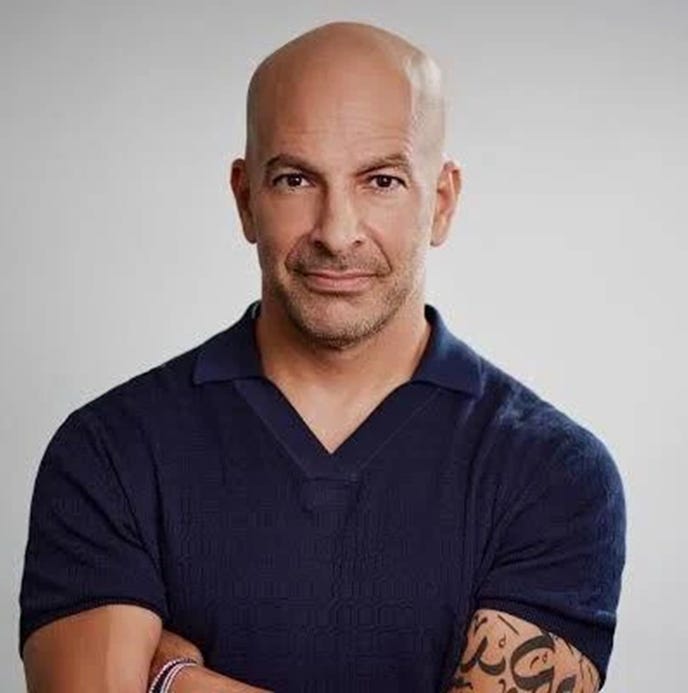
We don’t want to waste our time here on the Epstein Files, and Attia is very obviously a scum bag because, as the Files beyond reasonable doubt revealed (and as reported by Grose in her article) he was not only one of Epstein’s peripheral acquaintance but – as he himself described in an e-mail – an Epstein “friend,” who lamented that he “can’t tell a soul how outrageous Epstein’s life really was.” In short, he apparently knew exactly what was going on around Epstein and – still – was committed to secrecy which, of course, raises the question of participation.
Google describes him as a Canadian-American author, former researcher, and CBS News contributor known for his work in longevity medicine. He’s also the founder of Early Medical and has trained at Stanford, Johns Hopkins, and the NIH. Attia is known as a “longevity influencer” and “celebrity doctor.”
A PubMed search, however, revealed not a single peer reviewed publication with his name as author or even co-authors. Though he graduated Stanford University School of Medicine ( a very highly ranked medical school), and from there trained for 5 years in general surgery at John Hopkins Hospital (once again a very prestigious appointment) from where – according to Google – he moved into a two-year fellowship in surgical oncology at NIH. Yet - according to Grose – he left his residency before completion (difficult to understand, - considering his stint as a fellow at NIH but also confirmed by Google) and, therefore, never was eligible for board certification. He, however, as of 2026, is licensed as a physician in Texas, California, Oregon, and New York.
Interestingly, after dropping out of residency, he left medicine and worked at McKinsey & Company and at an energy company before returning to the medical field by opening a medical practice in San Diego that describes him as a specialist in General Surgery.
Yet what he is really nationally known for is an alleged special expertise as a longevity physician! He in an interview claimed to have fewer than 75 patients, - among those several celebrities (Hugh Jackman, Chris Hemsworth, etc) who paid him hundreds of thousands of dollars annually for “bespoke medical care.”
Grose in her article used – out of all people – Attia to demonstrate “the big lie propping up big wellness.” It, of course, seems appropriate to question how a non-practicing physician -surgeon (if this is what he is) with not a single peer-reviewed publication to his academic research record can make a career in geriatric medicine – or should we say longevity medicine, where even a major television network hires him as an “expert.”
How society defines “expert” (and not only in medicine) is, of course of great importance and one can it only describe as a difficult to explain paradox that at a time when society holds “experts” at likely the lowest esteem ever, chooses to follow “pseudo-experts” which so may influencers are. Just a thought!
Why Berri Weiss at CBS as one of her first hires chose to recruit Attia as a “news contributor ” – yes a medical news contributor – is difficult to understand, especially as – we here at the CHR – are among her biggest admirers of what she (with wife and sister) accomplished at THE FREE PRESS. In a way she as well as CBS, therefore, were lucky that all the media attention Attia received after release of the Epstein files led to his resignation as one of CBS’s “expert” medical pundits.2
MEDIA HEADINGS AFTER ATTIA’s RESIGNATION FROM CBS
Peter Attia Leaves CBS News
Amid Epstein Files Fallout
The New York Times. February 23, 2026
Peter Attia departs CBS News after communications with Epstein surface
The Hill, February 23, 2026
Celebrity doctor Peter Attia steps down from CBS over Epstein links
BBC
Peter Attia steps down as CBS
News contributor
CBS
Attia was not the only “expert” physician-scientist with special Epstein relationships as a recent article in Nature magazine noted.3 The academic “expert” class apparently loved Epstein and – at least so-far – did so primarily because of his generous donations (where all of his big money came from is still quite unclear); but who knows?
REFERENCES
Grose J. The New York Times. February 7, 2026. https://www.nytimes.com/2026/02/07/opinion/peter-attia-epstein-health-influencer.html
Astor M, Mullin B. The New York times. February 23, 2026. https://www.nytimes.com/2026/02/23/well/peter-attia-cbs-epstein.html
Garisto D. Nature 2026;650:529-530