

WHAT DOES GEROSCIENCE - THE SCIENCE OF AGING – HAVE TO DO WITH INFERTILITY?
So today is a special day at the CHR, - and not because mankind is after 50 years once again on the way to the moon. Nor does it seem like piece will suddenly break out in the Middle East. It’s a special day at the CHR because we are not only posting our usual Friday message through the Reproductive Times, but it is also the day of publication of our next CHRVOICE at a record-breaking 122 pages. In other words, we are offering our readers a double portion of reading materials. So don’t worry - you will have more than enough from the CHR for the long Easter weekend.
Here, our posting is dedicated to the field of geroscience, - the science of aging which has so many common denominators with infertility practice. Don’t miss either one of these two CHR offerings and – whether you love or hate the materials (and, of course, also if you are right in the middle of these two extremes), write to us and let us know what you think. And, also, - just as a reminder, you not only can at any point write a commentary to a paper or express your opinion in any other way. Any communication is welcome and will be considered for publication!
And, yes, you can also apply for a subscriptions to both publications and both are free. So don’t be shy!
The CHR’s Editorial Staff
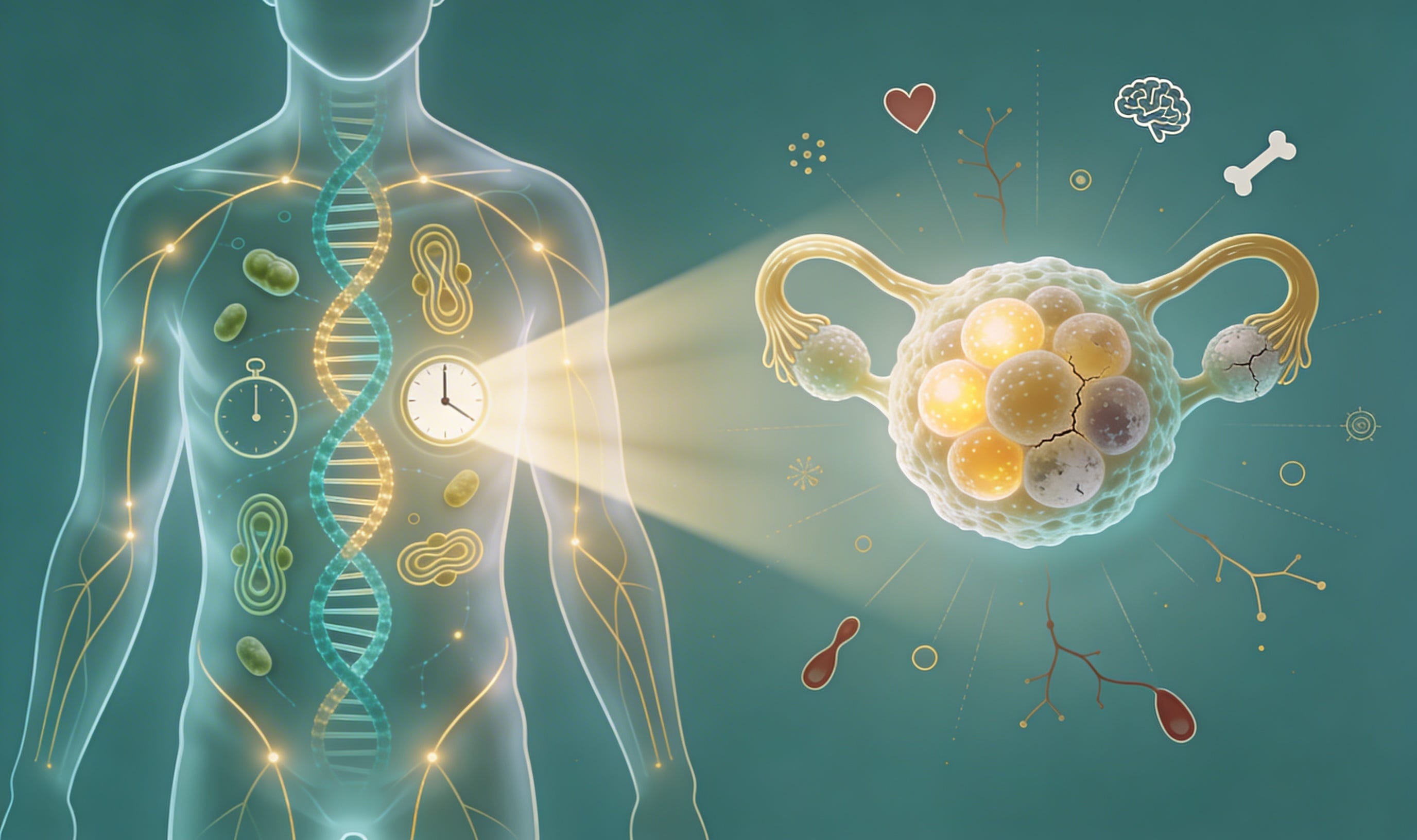
The Importance of the Aging Ovary for the Study of Aging
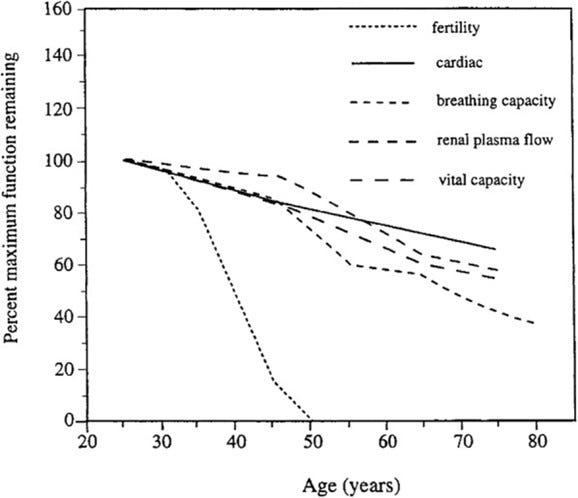
There, of course, is no better example for the science of aging to study than ovarian aging because the ovary is not only the most obviously aging organ in humans but likely also the most important organ to enter almost complete senescence so long before other organs (see Figure 1 below).
This, of course also means that it is the only major organ that almost completely enters senescence before death. But, interestingly, that was not always the case: As Figure 2 below demonstrates, life expectancies for females and males have been steadily increasing. Through roughly 1940, they indeed were quite similar, - though mildly favored females.
But after ca. 1940 something happened and women’s life expectancy significantly started exceeding that of males. Though that, in itself, is a fascinating observation that still lacks a good explanation, it is not the subject of this commentary today. The point we are trying to make here is that until the 20th century, U.S. life expectancy in women barely exceeded age 51, the current average age of menopause.
Unfortunately the historical data on average age at menopause are quite scarce. But available data suggest that – at least in more recent decades – that age has mildly increased and, with it, the reproductive life span of women.2 As Figure 2, however, also demonstrates, as recently as at the beginning of the 20th century, female life expectancy gave them – at best – only approximately 10 years of remaining life after onset of menopause. Until the 18th century most women, indeed, died even before reaching menopause.
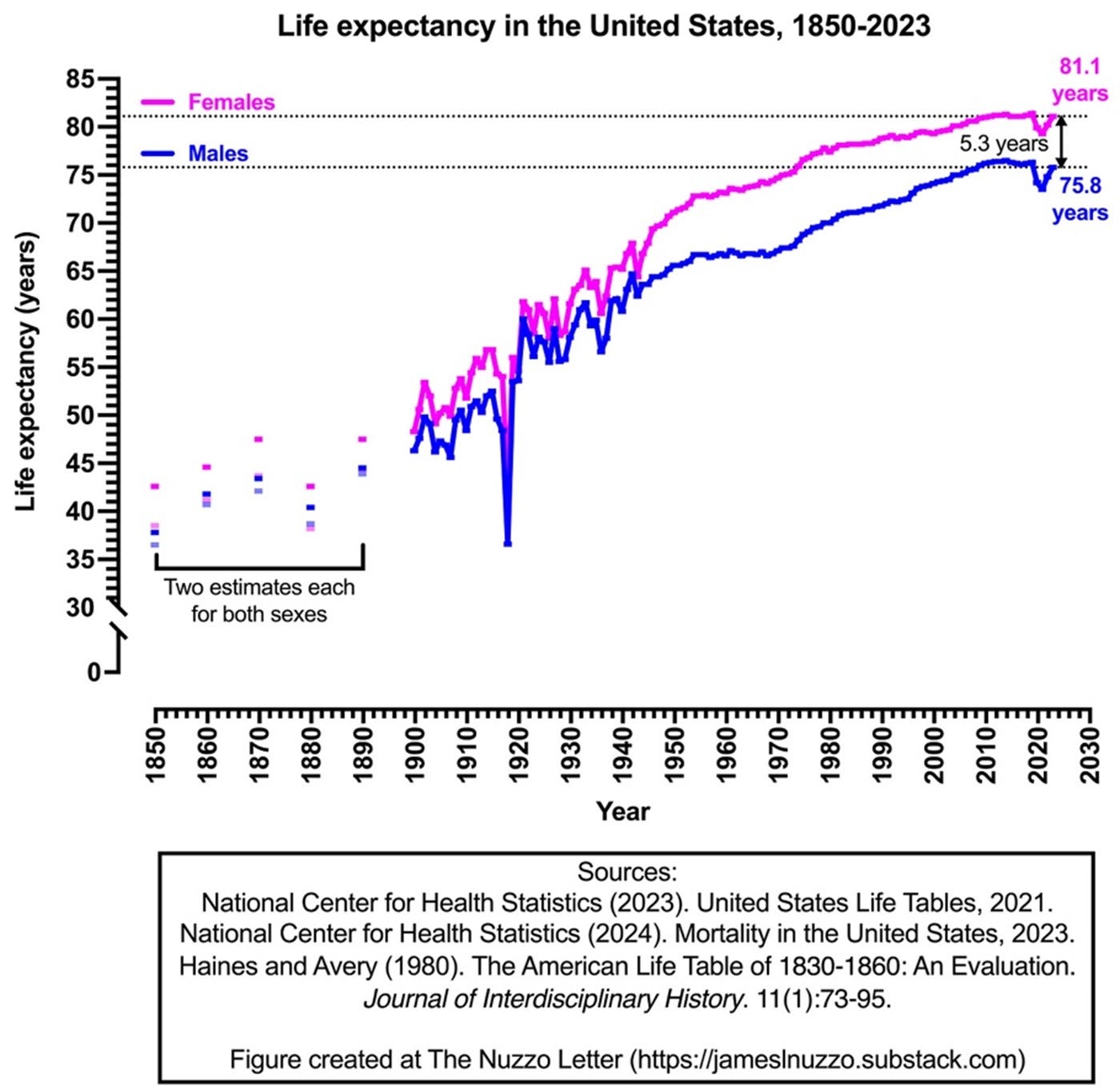
With female life expectancy in the U.S. now in the 80s, that has changed radically and – even with slightly later menopause than centuries ago - women now experience a lifespan of over 30 years postmenopausal. That, of course, has highly significant societal consequences and - suffice to say – has also considerable connotations for fertility practice At the same time, all of these observations, however, also reemphasized the importance of ovarian aging as a study subject not only for the infertility field, - but for geroscience in general and, of course, the opposite: Everything we learn in geroscience pretty automatically also may relate to ovarian aging. And if, until now, you did not understand why we often address geroscience in our literature reviews, - now you know!
REFERENCES
Chan et al., BMC Womens Health 2020;19(2):74
Appiah et al., JAMA 2021;325(13):1328-1330
Can Mesenchymal Stem Cell Therapy “Rejuvenate” and Slow Down Aging?
The most recent answer to this question is based on a very interesting paper by Chinese investigators in Cell. As the authors noted, aging is characterized by a deterioration of stem cell function. Even-though now already widely offered in many “rejuvenation clinics” in the U.S. and elsewhere, whether (and how) replacing such “aged” stem cells would counteract aging remains unclear. Their study, therefore, tried to establish some clarity regarding the subject.
They started the project by developing senescence (seno)-resistant human mesenchymal progenitor cells (SRCs), genetically fortified to enhance cellular resilience and then, In a 44-week trial, treated aged macaques monkeys intravenously with these SRCs. The result was a systemic reduction in aging indicators, such as cellular senescence, chronic inflammation, and tissue degeneration, without any detected adverse effects (see below the Graphic Abstract of the paper).
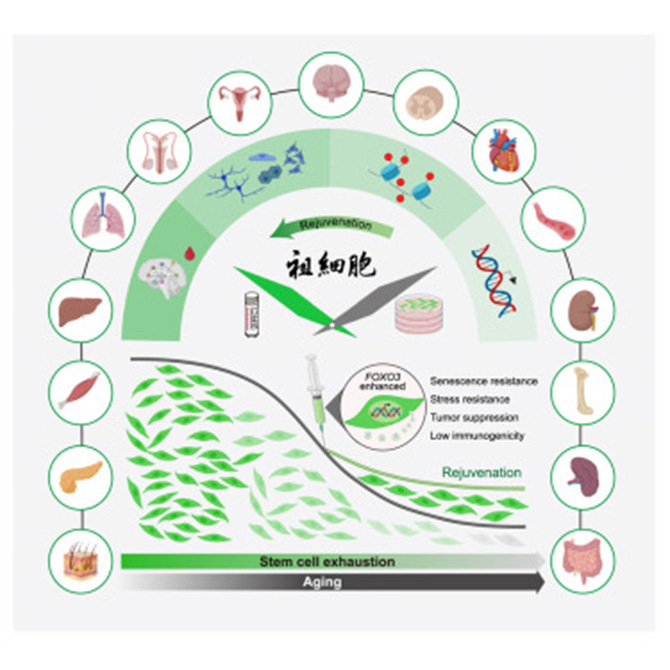
Notably, SRC treatment enhanced brain architecture and cognitive function and alleviated the reproductive system decline, with restorative effects of SRCs partly attributable to their exosomes, which combat cellular senescence.
In a commentary in the same journal, two U.S investigators concluded that by demonstrating multi-organ rejuvenation in their macaque study, the authors provided proof-of concept that stem cell therapies can, indeed, be used to slow down aging in general (in contrast to just treating one specific disease with stem cells). And with significant relevance to reproduction and potentially infertility, the SRCs boosted cognitive as well as reproductive rejuvenation, with geroprotection delivered through exosomal cargoes of SRCs.2
This excellent, paper therefore, provided strong initial evidence that genetically modified human mesenchymal progenitors can slow primate aging, highlighting the therapeutic potential of regenerative approaches in combating age-related health decline. And such treatments can – at least theoretically – be apparently applied in general across organ systems but also specifically targeted to one organ (like at least theoretically, for example the ovary) or one disease (like for example primary ovarian insufficiency, POI).
Some key questions remain, however, as the Commentary noted: (i) how do these mesenchymal progenitor cells achieve these rejuvenating effects? (ii) What is the exosome content that promotes the observed rejuvenation? And (iii) how do these cells and the involved exosomes interact with the patient’s immune system?
And then there are, of course, also practical translational questions to be resolved, such as GMP grade manufacturing of SRCs, where to get the stem cell from (which organ), and optimization of process (dosage, mode of delivery, etc.).
But a future of systemic rejuvenation is upon us, - it appears!
REFERENCES
Lei et al., Cell 2025;188(18):P5039-5061
Gorbunova V, Seluanov A. Cell 2025; 188(23):P6391-P6392
Is longer life really inheritable?
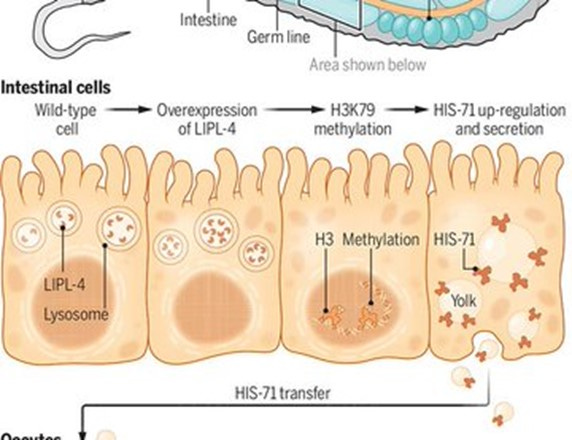
The answer to this question is, of course, intriguing and - so it appears at least according to another recent paper by other Chinese scientists - this time in Science. An Editor’s Summary introducing the paper1 explained this study perfectly when noting that in some model organisms starvation induces epigenetic changes that extend the lifespan of the progeny of those hungry parents (in itself, of course a fascinating observation demonstrating once more the infinitive wisdom of evolution). The study the paper then reported attempted to determine the mechanism of how this happened in the roundworm and implicated an enzyme – lysosomal lipase-like 4 (LIPL-4) in the process.
Increased activity of LIPL-4 in turn activated signaling in intestinal lysosomes (aren’t the guts involved in everything?) which led to increased transcription and production of variant histones H3.3 which then could be transferred to the germline, where it was modified by a methyltransferase and transmitted to progeny, where it extended lifespan. A commentary here, too, in the same journal further explained the process, making the point that, - though the original paper from China very well documented how lysosome activity can influence the epigenome (and with it transgenerational longevity), the process can also revert, - with signals from the epigenome going to the lysosomes.
REFERENCES
Zhang et al., Science 2025;389:1353-1365
Bohnert KA. Science 2925;389(6767):1295-129
How Important is Education for Memory Decline and Brain Aging?
Historically, better education has been associated with better memory and healthier brain structure at older ages. But now a study in Nature Medicine involving 400,000 memory scores and 15,000 MRI scans came to very different conclusions, suggesting that the previously observed association was likely due to other early life factors.1
More education was associated with better memory, larger intracranial volume and slightly larger volume of memory-sensitive brain regions. However, education did not protect against age-related decline or weakened effects of brain decline on cognition. One potential explanation for these findings is that they denote selection of individuals with certain traits to pursue more education. Although education has numerous benefits, the notion that it provides protection against cognitive, or brain decline was not supported by the study.
REFERENCE
Fjell et al., Nat Med 2025;31(9):2967-2976
More Evidence that Shingles Vaccine Protects from Dementia Along Its Entire Clinical Course
The world is by now over the surprise that the shingles vaccine protects against dementia, - even though why that is the case is still not clear. But a new paper in Cell actually demonstrated that this protective effect goes even further than was originally assumed.
Using natural experiments (for further detail see below), these authors previously reported that live-attenuated herpes zoster (HZ) vaccination appears to have prevented or delayed dementia diagnoses in both Wales and Australia. Here, they add to these findings that shingles vaccination also reduces mild cognitive impairment diagnoses and, among patients living with dementia, deaths due to dementia. These effects, moreover, were not dependent on one or more specific dementia types.1
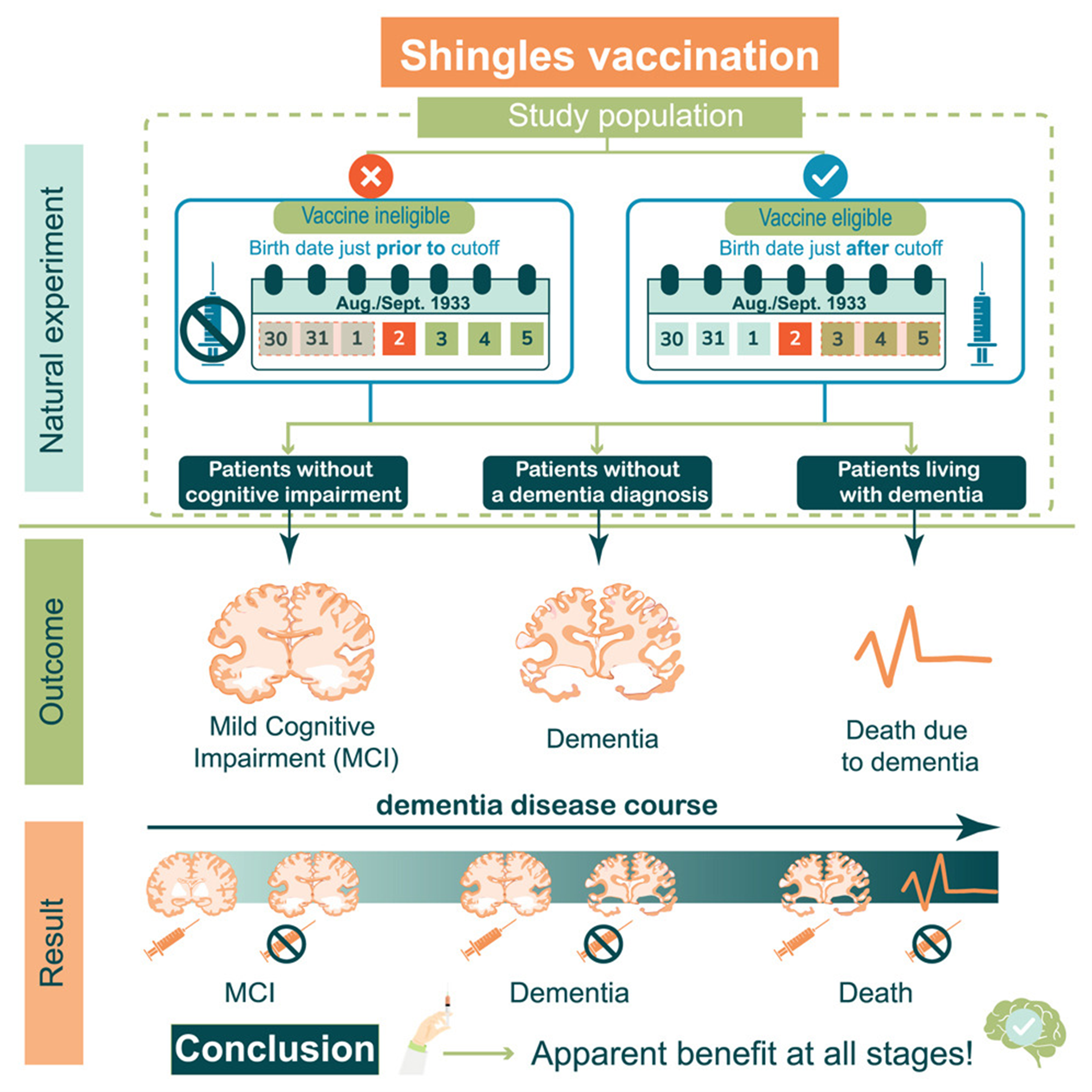
Their research strategy took advantage of natural circumstances in how the vaccine had historically been administered: The researchers took advantage of the fact that individuals who had their 80th birthday just after the start date of the vaccination program in Wales were eligible for the vaccine for 1 year, whereas those who had their 80th birthday just before were ineligible and remained ineligible for life.
Their research strategy took advantage of natural circumstances in how the vaccine had historically been administered: The researchers took advantage of the fact that individuals who had their 80th birthday just after the start date of the vaccination program in Wales were eligible for the vaccine for 1 year, whereas those who had their 80th birthday just before were ineligible and remained ineligible for life.
The key strength of their natural experiments therefore was, that these comparison groups should be similar in all characteristics except for a minute difference in age. Yet their findings suggested that live-attenuated vaccination prevented or delayed mild cognitive impairment and dementia and slowed the disease course among those already living with dementia.
Their research strategy took advantage of natural circumstances in how the vaccine had historically been administered: The researchers also took advantage of the fact that individuals who had their 80th birthday just after the start date of the vaccination program in Wales were eligible for the vaccine for 1 year, whereas those who had their 80th birthday just before were ineligible and remained ineligible for life.
REFERENCE
Xie et a., Cell 2025;188:1-16
Thanks for this. I am currently working on a thesis focused on Menopause and am interested in the broader Geroscience domain for future direction.
Very informative.
How do you find this field moving in the next 5 years?